
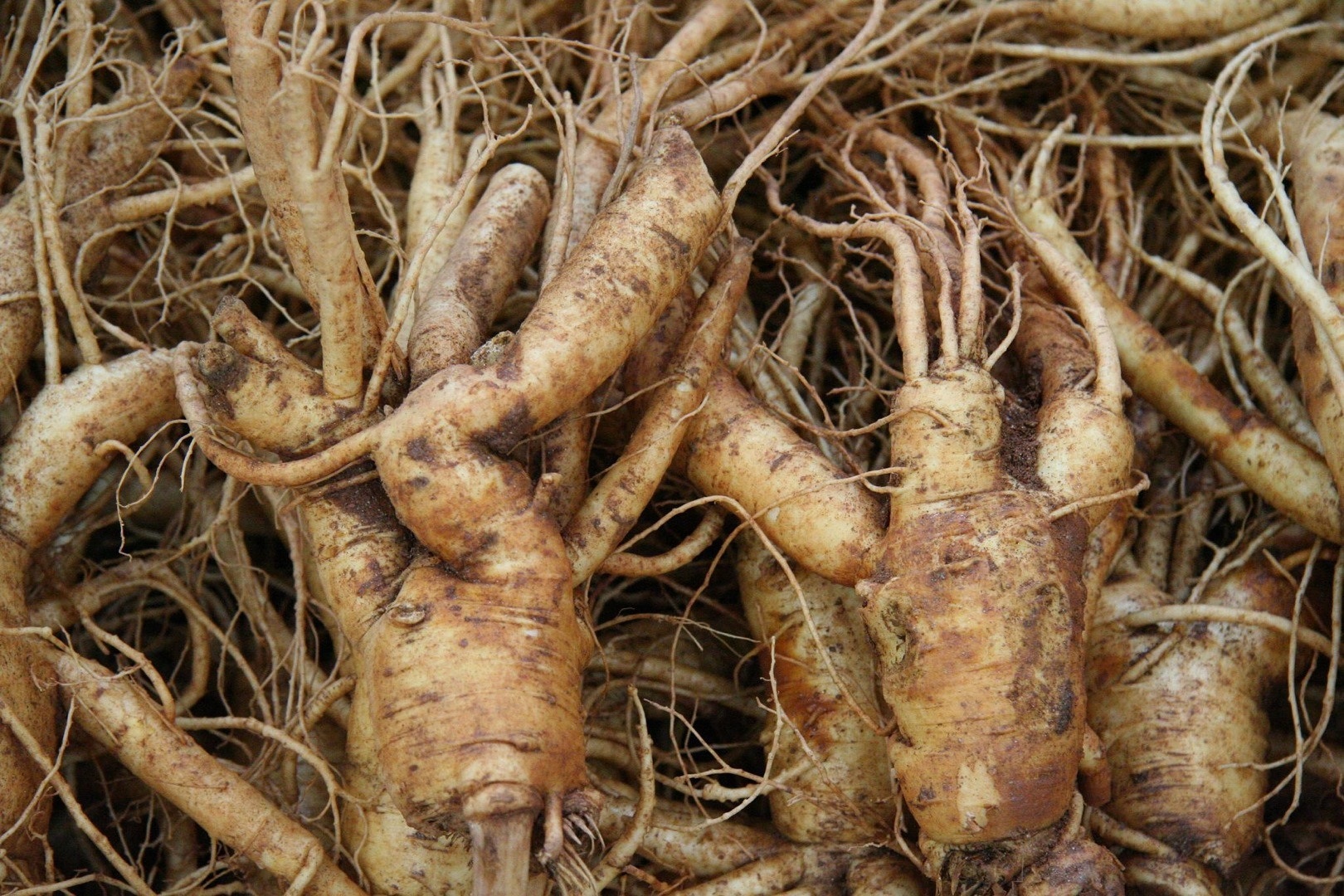
Did you know that ginseng is not only a  great supplement for promoting health but also an important part of American history? Panax ginseng, the species found in Asia, has been used in Chinese medicine for thousands of years. Panax quinquefolius, American ginseng, was similarly used by Native Americans but is less well documented. Records of ginseng’s history in North America began with European settlers. French Jesuit missionary Father Joseph Francois Lafitau is credited with “discovering” ginseng in Canada, after reading another Jesuit missionary’s (Father Pierre Jartoux) 1714 account of the variety he learned about in China. Lafitau assumed that, due to the similar climates and growing conditions of the two places, ginseng may also be found in the New World. He was right, and he located and learned about ginseng with the help of the Mohawk tribe near Montreal.Panax quinquefolius is found throughout eastern Canada and United States. Its abundance in the 1700s and the high demand for it in China led European settlers in North America to develop a thriving ginseng trade. Profits from this trade even helped the U.S. pay off its debts to France for its assistance during the Revolutionary War.
 Ginseng was important to the lives of many famous Americans. Thomas Jefferson listed it in his inventory of native plant resources. Daniel Boone traded ginseng in addition to furs, as did John Jacob Astor, America’s first multi-millionaire.
Because it was highly profitable, harvesting wild ginseng continued for many years, and cultivation as a domesticated crop began in the late 1800s. By the 20th century, wild roots became scarce due to over-harvesting. Today, wild American ginseng is protected under CITES, the Convention on International Trade of Endangered Species of Wild Fauna and Flora. Most states where ginseng can be found have strict prohibitions and regulations on digging for ginseng, though poaching is a persistent problem because old, wild roots fetch the highest prices.
Cultivated ginseng, however, is still an important crop, and the ginseng capital of the U.S. is Wisconsin. About 200 growers there account for at least 90 percent of cultivated ginseng production in America.
Many people are unaware that ginseng is at the root of both American health and history. But in the fall of 2011, the first American Ginseng Museum opened in San Francisco. It’s hard to tell what the museum is like without having been there, but it does have a great, comprehensive 13-minute video, covering 300 years of ginseng’s history. You can watch it here or on the museum’s web site. What else have you learned about this historical root?